Principles, Testing Processes and Industry Value of Fog Light Airtightness Testing in the Aftermarket Manufacturing Sector
Author: BILITEN
2026-06-12
Introduction
Automotive lighting manufacturing in the aftermarket operates independently of the original equipment manufacturer (OEM) supply chain. It encompasses diverse segments—such as aftermarket replacements, performance upgrades, refurbishment of salvaged parts, and components for accident repairs—serving as a core link in the national automotive maintenance and modification supply chain. As exposed safety lights, fog lamps rely on airtightness as a critical factor determining product quality, service life, and market reputation; consequently, airtightness testing has become a pivotal process for aftermarket enterprises regarding quality control, manufacturing process upgrades, regulatory compliance, and competitive differentiation.
Core Principles and Testing Processes for Airtightness Testing in Automotive Fog Lamp Manufacturing
The fundamental logic behind airtightness testing for automotive fog lamps relies on the principles of gas fluid dynamics and pressure equilibrium. As fog lamps are enclosed units, defects such as improperly compressed sealing rings, welding gaps, pinholes in the housing, faulty breather valves, or assembly clearances can lead to the infiltration of gas or moisture due to the pressure differential between the interior and exterior. Testing involves artificially creating a stable pressure differential and monitoring changes in pressure or flow parameters to detect leaks and quantify their severity. There are two primary testing processes used in the industry.
(I) Pressure Decay Test (Standard Mass-Production Process)
The pressure decay method is a standard testing process for the mass production of aftermarket automotive lights, suitable for various replacement and universal-type fog lights. Given the characteristics of these lights—such as thin housings, lightweight designs, and low high-pressure tolerance—a low-pressure testing standard is employed. Mass-production tooling is used to seal exposed openings, creating a hermetically sealed chamber; low-pressure air is then introduced, the pressure is stabilized, the air supply is cut off, and the rate of pressure decay is monitored. If no defects are present, the pressure remains stable; however, if issues such as pinholes, adhesive voids, gaps, or seal deformation exist, the resulting pressure drop leads to the part being classified as defective. This process is fast, cost-effective, and compatible with assembly lines, aligning perfectly with a high-speed production and sales model.
(II) Vacuum Decay Testing Combined with Immersion Sampling (Quality Control Process for High-End Lighting)
For mid-to-high-end aftermarket products—such as high-brightness LED fog lights and fog lights with retrofit projector lenses—the industry commonly employs a dual quality control approach combining vacuum decay testing with immersion testing. Vacuum decay testing creates a negative-pressure environment to precisely detect minute leaks, such as micro-pores or micro-cracks, offering higher accuracy than conventional pressure tests. Concurrently, batch-based sampling involves constant-temperature immersion tests that simulate conditions like rainy-day soaking and high-pressure washing; this verifies long-term sealing stability and prevents latent quality issues—such as slow seepage or low-temperature fogging—thereby ensuring the reliability of high-end lighting products.

The Value of Airtightness Testing in Empowering the Upgrading of the Aftermarket Automotive Lighting Industry
For the current aftermarket automotive lighting industry, airtightness testing not only resolves issues such as leakage in individual products (e.g., fog lights) but also empowers enterprise development across multiple dimensions—including production standardization, product differentiation, regulatory compliance, and manufacturing process iteration.
(I) Strictly controlling mass-production defects to ensure high product quality upon leaving the factory
Small and medium-sized enterprises in the automotive lighting aftermarket often rely on generic molds and manual adhesive application. This approach makes them prone to hidden defects such as injection molding shrinkage, pinholes, uneven mold clamping, misaligned adhesive strips, and malfunctioning breather valves. While difficult to detect with the naked eye, these issues are the root causes of problems like water ingress, fogging, corrosion, and burnout in fog lights. Implementing 100% airtightness testing on the production line allows for the batch rejection of units with poor sealing. This addresses the persistent issue of products passing factory inspection only to fail immediately upon installation, thereby improving yield rates, reducing scrap losses, and lowering production costs.
(II) Achieving Product Differentiation and Enhancing Brand Competitiveness
Many low-end manufacturers currently omit airtightness testing procedures, leaving product sealing performance unassured. Large-scale, standardized automotive lighting manufacturers can position standardized, 100% airtightness testing as a key selling point and a hallmark of quality. By leveraging test data and quality control processes to create a differentiated product advantage, they can deliver high-value, highly reliable aftermarket fog lights, thereby increasing their potential for price premiums and strengthening brand competitiveness.

Summary
Airtightness testing in the automotive aftermarket lighting sector has evolved far beyond the basic function of simple leak detection; it has become a comprehensive system that empowers production, quality control, operations, and overall development.
Furthermore, as automotive lighting systems continue to advance toward greater electronification and integration, airtightness testing is an essential process for ensuring that fog lamp products meet requirements for IP protection ratings, thermal cycling durability, and manufacturing consistency, thereby serving as a critical control point within the framework of automotive passive safety and reliability engineering.
Another option for car headlight upgrades: Car Grille Lights
Related Article
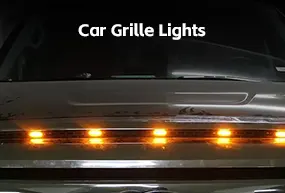
In today's world where artistic aesthetics and practical technology are combined, the emergence of car grille lights is inevitable.
Another option for car headlight upgrades: Car Grille Lights
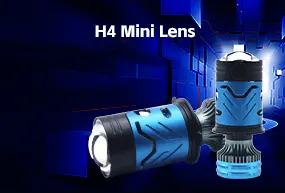
The H4 Mini Lens is an integrated upgrade system designed specifically for H4 halogen headlights. Let's learn more about it.
H4 Mini Lens - An Optical Revolution