The Rise of New Energy Vehicles Drives a New Transformation in the Automotive Lighting Industry
Author: BILITEN
2026-05-29
For over a century, the mission of automotive lighting has remained constant: to illuminate the path ahead, signal turns, and warn those behind. However, with the meteoric rise of new energy vehicles, this seemingly mature component is now undergoing an unprecedented transformation of its value.
In 2025, the global penetration rate of new energy vehicles surpassed 30% of total global vehicle sales for the first time. Amidst this wave of electrification and intelligentization, automotive lighting is rapidly evolving from a mere "functional illumination tool" into an "intelligent interactive terminal." It serves not only as a guardian of safety but also as the core of brand identity and a conduit for emotional connection.
Technological Transformation: From "Illumination" to "Communication"
1. Upgrading light source technology is the foundation of change.
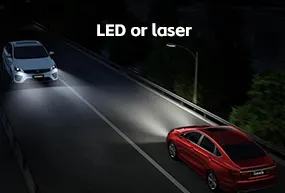
Compared to traditional halogen lamps, LEDs consume over 60% less energy and are reduced to one-fifth the size, giving designers unprecedented design freedom. Today, LEDs have become standard equipment in new energy vehicles, and more advanced Micro LEDs and laser headlights are rapidly entering mass production.
2. The car lights have begun to "think".
A new type of headlight that can "think" has emerged on the market: Adaptive High Beam (ADB). These headlights can accurately identify oncoming vehicles and actively block or dim the light illuminating others, while maintaining normal high beam illumination in other areas.
3. The Rise of Intelligent Interaction
In terms of interactive functionality, headlights have transcended the single light-emitting attribute and possess visual interactive capabilities. Micro-LED headlights can integrate thousands of independent light-emitting units to achieve pixelated control of light, and can project patterns such as driving trajectory, turn prompts, and distance warnings. Some high-end models can also use headlights to complete humanized interactions such as pedestrian yielding and fault reminders, enabling cars to achieve "communication through light and shadow".

Shifting Industry Landscape: Opportunities and Challenges Coexist
1. Value increased significantly
Industry data shows that the value of a single headlight on a traditional gasoline-powered vehicle is approximately 1,500-2,000 yuan. However, the headlight system of a new energy vehicle equipped with ADB (Adaptive Driving Assist), an interactive screen, and a continuous LED strip can be worth 5,000-10,000 yuan, and even more for high-end models.
2. The accelerated transformation of traditional giants
International Tier 1 giants such as Hella and Valeo are increasing their investment in LED matrix, laser light sources, and DLP projection technologies. Leveraging their century-long experience in optical design and automotive-grade manufacturing, they remain key players in the high-end market.
3. Costs remain relatively high.
High-definition projection headlights (such as DLP) still cost over 5,000 yuan per unit, and intelligent interactive screens are also quite expensive. High-end automotive lighting solutions are currently concentrated in mid-to-high-end models priced above 250,000 yuan, and widespread adoption is still some way off.
4. The challenges of engineering research and development
Vehicle lights must maintain stable operation in extreme environments such as -40°C, 85°C, sandstorms, heavy rain, and high-frequency vibrations. Meanwhile, the long-term durability, heat dissipation management, and waterproof/dustproof ratings of electronic components such as Micro LEDs and interactive screens are still under research, posing a significant challenge for subsequent engineering verification.

Future Trend: Car Headlights Will Become "Screens on Wheels"
In the long run, new energy vehicles will continue to drive the automotive lighting industry toward intelligence, integration, lightweighting, and greening.
On the technical front, Micro-LED and laser headlights will gradually become more widespread, and the pixel precision and interactive capabilities of vehicle lights will continue to be upgraded, enabling diversified functions such as high-definition projection, dynamic subtitles, and road condition projection. At the same time, they will integrate sensing, perception, and computing capabilities to create an in-vehicle "light intelligent terminal".
At the product level, the headlights will be integrated with the body, sunroof, and exterior trim. Lightweight composite materials will replace the traditional heavy shell, taking into account both aesthetics and energy saving, and adapting to the lightweight development needs of new energy vehicles.
Summary: An irreversible battle for dimensional advancement
The rise of new energy vehicles has transformed vehicle lights from mere road illumination tools into a language of communication; from passive functional components to proactive intelligent terminals; and from low-value accessories to high-premium brand assets.
For the automotive lighting industry, this presents both opportunities and challenges. Only by deeply cultivating core technologies, addressing industry shortcomings, and refining the industrial experience can automotive lighting companies continue to capitalize on industry dividends, drive large-scale development, and achieve technological leadership and global dominace.a
Smart Vehicle Lighting: Three Technical Pathways from "Illumination" to "Communication"
What challenges do Chinese domestic automotive lighting brands face in the current global automotive lighting market?
Related Article
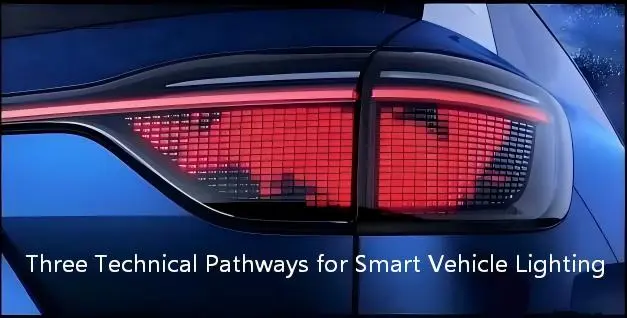
What exactly are the three technical pathways for smart vehicle lighting?
Smart Vehicle Lighting: Three Technical Pathways from "Illumination" to "Communication"
This article discusses the challenges currently faced by Chinese domestic automotive lighting brands.
What challenges do Chinese domestic automotive lighting brands face in the current global automotive lighting market?