There are two most common drivers for automotive lights. Do you know them?
Author: Biliten
2025-10-13
Introduction: Continuing from the previous article, the driver is the heart of a car headlight, supporting its precise operation. Drivers are categorized as internal and external. How do you differentiate between the two and how do you choose? This article will explore this question.
Internal/External Driver Concept
1.Internal drivers, also known as integrated drivers, integrate the driver circuitry directly within the vehicle's lamp assembly or bulb.
Working Principle:
After electrical energy enters the lamp from the vehicle's interface, it is first transformed and stabilized by the internal micro-driver board before being supplied to the LEDs.
Working Principle:
After electrical energy enters the lamp from the vehicle's interface, it is first transformed and stabilized by the internal micro-driver board before being supplied to the LEDs.
2.An external driver, also known as a split driver, houses the driver circuitry in a small, independent box that connects to the LED light head via a wiring harness.
Working Principle:
Electricity enters the external driver box from the vehicle's interface, undergoes conversion and stabilization, and is then transmitted via a cable to the remote LED light head.
Working Principle:
Electricity enters the external driver box from the vehicle's interface, undergoes conversion and stabilization, and is then transmitted via a cable to the remote LED light head.
Internal Driver vs. External Driver
1. Internal Driver
Advantages:
(1) High integration and easy installation: The internal driver headlight has an integrated lamp body structure and no external components. The installation method of the plug-in bulb type is the same as that of the traditional halogen bulb, which is plug-and-play and has a simpler appearance.
(2) Space saving and strong adaptability: The built-in design of the driver module does not require additional space in the engine compartment for fixing, and is highly adaptable to models with compact engine layouts.
(3) Original factory design: The vast majority of models on the market that are equipped with LED headlights adopt the internal driverr solution to ensure the overall stability of the lighting system and the coordinated and beautiful appearance of the vehicle.
Disadvantages
(1) Significant heat dissipation pressure: The driver circuit and LED lamp beads are both the main heat sources. The two are integrated in a small space, and the heat is easily superimposed on each other, forming a "mutual baking" effect. This places extremely high demands on the heat resistance of the heat dissipation material and the efficiency of the heat dissipation technology. Once the heat dissipation is poor, the service life of the driver and LED will be significantly shortened.
(2) High maintenance cost: If the driver and lamp beads of this type of headlight are damaged, it is often impossible to replace the faulty parts separately during maintenance. Usually, the headlight assembly or bulb module must be replaced as a whole, resulting in a significant increase in maintenance costs.
Advantages:
(1) High integration and easy installation: The internal driver headlight has an integrated lamp body structure and no external components. The installation method of the plug-in bulb type is the same as that of the traditional halogen bulb, which is plug-and-play and has a simpler appearance.
(2) Space saving and strong adaptability: The built-in design of the driver module does not require additional space in the engine compartment for fixing, and is highly adaptable to models with compact engine layouts.
(3) Original factory design: The vast majority of models on the market that are equipped with LED headlights adopt the internal driverr solution to ensure the overall stability of the lighting system and the coordinated and beautiful appearance of the vehicle.
Disadvantages
(1) Significant heat dissipation pressure: The driver circuit and LED lamp beads are both the main heat sources. The two are integrated in a small space, and the heat is easily superimposed on each other, forming a "mutual baking" effect. This places extremely high demands on the heat resistance of the heat dissipation material and the efficiency of the heat dissipation technology. Once the heat dissipation is poor, the service life of the driver and LED will be significantly shortened.
(2) High maintenance cost: If the driver and lamp beads of this type of headlight are damaged, it is often impossible to replace the faulty parts separately during maintenance. Usually, the headlight assembly or bulb module must be replaced as a whole, resulting in a significant increase in maintenance costs.

2. External Driver
Advantages
(1) Excellent heat dissipation performance (core advantage): The driver module adopts an independent external design, which can be away from the "high temperature oven" area of the lamp head and lampshade, which can significantly reduce its own operating temperature and greatly extend its service life. At the same time, the heat dissipation system of the lamp head does not need to take into account the driver, and can focus more on optimizing the heat dissipation of the LED lamp beads, further improving the overall heat dissipation efficiency.
(2) Better stability and life: Efficient heat dissipation capacity directly translates into stronger operating stability and longer product life. The driver is the "control core" of the LED lamp, and its working state directly affects the performance of the lamp. The external design allows it to effectively avoid high temperature corrosion, providing key guarantees for the long-term stable operation of the lamp.
(3) Convenient and economical maintenance and upgrades: If the driver fails, there is no need to replace the entire headlight assembly. Only the independent driver box needs to be replaced separately, which greatly reduces the maintenance cost. In addition, some high-end external drivers support program upgrades, which provides the possibility for the iteration of lamp functions.
(4) High design flexibility: After the driver is freed from the limitations of the internal space of the lamp body, a higher-power version can be designed specifically, or more complex functions can be integrated, creating a broader space for improving the performance and expanding the functions of the lamp.
(1) Excellent heat dissipation performance (core advantage): The driver module adopts an independent external design, which can be away from the "high temperature oven" area of the lamp head and lampshade, which can significantly reduce its own operating temperature and greatly extend its service life. At the same time, the heat dissipation system of the lamp head does not need to take into account the driver, and can focus more on optimizing the heat dissipation of the LED lamp beads, further improving the overall heat dissipation efficiency.
(2) Better stability and life: Efficient heat dissipation capacity directly translates into stronger operating stability and longer product life. The driver is the "control core" of the LED lamp, and its working state directly affects the performance of the lamp. The external design allows it to effectively avoid high temperature corrosion, providing key guarantees for the long-term stable operation of the lamp.
(3) Convenient and economical maintenance and upgrades: If the driver fails, there is no need to replace the entire headlight assembly. Only the independent driver box needs to be replaced separately, which greatly reduces the maintenance cost. In addition, some high-end external drivers support program upgrades, which provides the possibility for the iteration of lamp functions.
(4) High design flexibility: After the driver is freed from the limitations of the internal space of the lamp body, a higher-power version can be designed specifically, or more complex functions can be integrated, creating a broader space for improving the performance and expanding the functions of the lamp.
Disadvantages
(1) Appearance is not simple enough: Compared with the internal driver design, the external solution has an external drive box and a set of connecting wires, which may not meet the appearance requirements of car owners who pursue the ultimate neatness.
(2) Installation is slightly complicated: The drive box needs to be fixed in a suitable position in the engine compartment (usually away from heat sources such as the water tank and engine), which may take up additional space.
(3) High waterproof standards: To avoid water damage, two major waterproof conditions must be met at the same time: first, the drive box itself must reach a high waterproof level (commonly IP67); second, all wiring harness interfaces must ensure strict sealing. Any omission in any link may cause failure.
(2) Installation is slightly complicated: The drive box needs to be fixed in a suitable position in the engine compartment (usually away from heat sources such as the water tank and engine), which may take up additional space.
(3) High waterproof standards: To avoid water damage, two major waterproof conditions must be met at the same time: first, the drive box itself must reach a high waterproof level (commonly IP67); second, all wiring harness interfaces must ensure strict sealing. Any omission in any link may cause failure.

How to choose?
Depending on your needs and preferences, it depends on the situation.
Built-in driver eadlights are suitable for the following groups of people:
(1) Car owners who prefer easy installation and a stable experience:
When installing a built-in headlight, you usually only need to replace the original headlight with the original headlight. There is no need to deal with additional issues such as fixing the driver box and connecting the wiring harness, so the installation is relatively easy.
(2) Car owners who pursue extreme neatness:
Built-in headlights do not take up space for additional driver boxes, are more friendly to the regularity of the engine compartment, and are conducive to presenting a unified, simple and orderly state inside and outside the vehicle.
When installing a built-in headlight, you usually only need to replace the original headlight with the original headlight. There is no need to deal with additional issues such as fixing the driver box and connecting the wiring harness, so the installation is relatively easy.
(2) Car owners who pursue extreme neatness:
Built-in headlights do not take up space for additional driver boxes, are more friendly to the regularity of the engine compartment, and are conducive to presenting a unified, simple and orderly state inside and outside the vehicle.

External driver headlights are suitable for the following groups of people:
(1) Car owners who enjoy personalized modifications and flexible upgrades:
Externally driven headlights offer greater flexibility when modifying. Car owners can choose driver modules with different power and light types according to their needs and preferences, easily achieving personalized customization of headlight performance.
(2) Car owners with certain hands-on skills:
For car owners with certain hands-on skills, they can complete the installation and debugging of the external driver by themselves, further saving installation costs and obtaining a lighting effect that meets basic needs at a lower cost.
(3) Car owners who frequently need to change different types of headlights: Some car owners may need to frequently change the type of headlights due to participating in different car activities or according to different driving scenarios, such as switching from low beam to high beam, or changing to headlights with special functions. In this case, externally driven headlights are more convenient. Car owners only need to replace the lamp body without having to deal with the re-adaptation of the driver module, which greatly improves the efficiency of headlight replacement.
Externally driven headlights offer greater flexibility when modifying. Car owners can choose driver modules with different power and light types according to their needs and preferences, easily achieving personalized customization of headlight performance.
(2) Car owners with certain hands-on skills:
For car owners with certain hands-on skills, they can complete the installation and debugging of the external driver by themselves, further saving installation costs and obtaining a lighting effect that meets basic needs at a lower cost.
(3) Car owners who frequently need to change different types of headlights: Some car owners may need to frequently change the type of headlights due to participating in different car activities or according to different driving scenarios, such as switching from low beam to high beam, or changing to headlights with special functions. In this case, externally driven headlights are more convenient. Car owners only need to replace the lamp body without having to deal with the re-adaptation of the driver module, which greatly improves the efficiency of headlight replacement.

Summary
Both internal and external drivers for automotive lighting have their own advantages. Internal drivers offer high integration, easy installation, and low cost, making them an ideal upgrade for most everyday vehicles. External drivers, on the other hand, offer excellent heat dissipation, high stability, and ease of maintenance, making them more suitable for professional modifications requiring extreme performance. The ultimate choice comes down to a balance between your vehicle's conditions, performance requirements, budget, and the importance you place on easy maintenance. There's no absolute best solution, only the most suitable.
Optical Components - Prisms
Automotive Lighting Electronics: Driver
Related Article
This article explains the rationale behind the creation of tri-color fog lights.
One Product for All Road Conditions—The Rationale Behind the Tri-color Fog Light Design
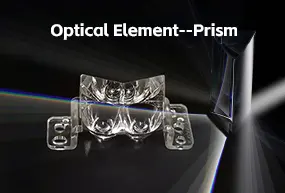
This article introduces the optical component for automotive lighting: prisms.
Optical Components - Prisms