
Car Headlight Height Is Not Adjustable at Will! Both Excessive and Insufficient Heights Pose Driving Safety Risks
Author: BILITEN
2026-05-08
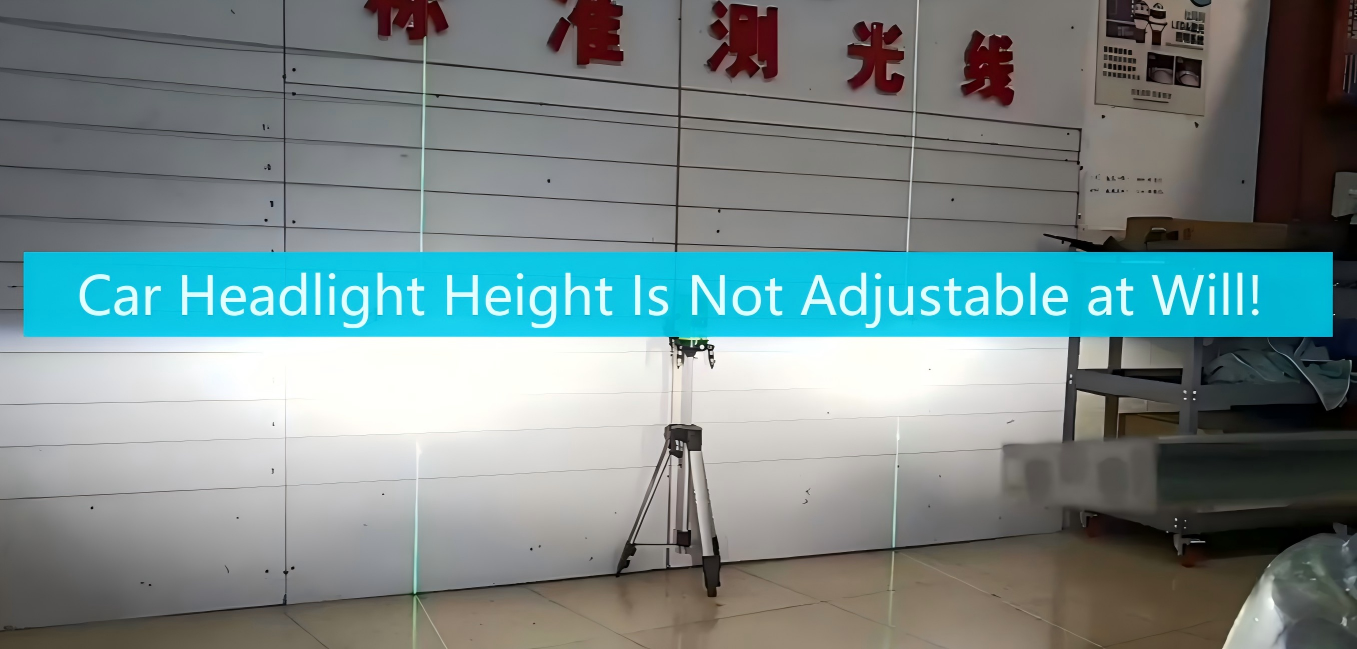
When driving at night, many car owners tend to focus solely on whether their headlights are bright enough, often overlooking the critical detail of headlight aim. In daily use, many drivers either neglect to adjust their headlights altogether or do so haphazardly, relying entirely on intuition: some deliberately raise their beams to illuminate the road further ahead, while others—feeling that city streetlights already provide sufficient illumination—habitually aim their lights downward. In reality, headlight aim is not a setting to be adjusted arbitrarily; aiming the lights too high or too low creates significant safety hazards. Indeed, a considerable number of nighttime accidents—including sideswipes during oncoming traffic, rear-end collisions, and incidents caused by blind spots—stem directly from improper headlight aim. This article will provide a detailed explanation of the correct methods for adjusting headlight aim, helping drivers avoid common pitfalls and ensure safer travel at night.
I. Common Misconceptions: Most Car Owners Adjust Their Headlights Incorrectly
Misconception 1: Chasing Ultimate Visibility by Blindly Raising Headlight Height
Many car owners—particularly those who frequently drive on highways at night or on unlit suburban roads—harbor a deeply ingrained belief that "the higher the headlights, the safer it is." However, this mindset fundamentally represents a self-centered approach to driving that disregards others; it focuses solely on enhancing one's own field of vision while completely ignoring the public safety regulations governing road traffic.
Misconception 2: Overzealous Politeness Leading to Deliberately Lowered Headlights
Many car owners assume that since urban roads are fully illuminated by streetlights, high headlight brightness is unnecessary; they believe that lowering their headlights is a harmless gesture that prevents dazzling other drivers. Little do they realize that excessively lowering headlight height directly restricts the effective illumination range, creating large blind spots in front of the vehicle. While this practice may appear to be a courteous way of driving, it actually drastically compromises one's own safety during nighttime travel, posing a significant hidden hazard.

II. The Logic Behind Headlight Height Adjustment
The height adjustment settings for vehicle headlights are not merely decorative; manufacturers have designed a 0–5 level adjustment range based on vehicle load and body attitude. Level 0 positions the beam at its highest, while Level 5 positions it at its lowest, allowing the headlights to adapt to various driving scenarios and precisely mitigate potential safety hazards.
1. Single Occupant / Unloaded Driving: With a stable body attitude, set the adjustment to Levels 0–1 to meet standard road illumination requirements.
2. Rear Passengers or Heavy Cargo in Trunk: As the rear of the vehicle settles and the front end lifts slightly—causing the headlight beam to rise naturally—it is recommended to adjust the setting to Levels 2–3.
3. Fully Loaded or Heavily Weighted Vehicle: The front of the vehicle will tilt upward significantly; the setting must be adjusted to level 4 or 5 to calibrate the headlight height.

III. Self-Inspection and Calibration Method for Beginners (For Reference Only)
Park the vehicle on level ground, approximately 5 meters away from a wall, and switch on the low beam headlights. Under normal, standard conditions, the cutoff line of the beam should sit slightly below the horizontal level of the headlights themselves. The light should be concentrated on the road surface, with no direct upward glare; there should be no signs of scattered light or beams projecting toward the sky.
For minor daily deviations, you can make immediate fine adjustments using the headlight leveling knob located inside the cabin. If the deviation is significant or the cutoff line appears irregular, a precise calibration can be performed using the adjustment screws located on the back of the headlight assemblies. Of course, for more complex situations, it is advisable to seek assistance from a professional.
Important Reminder: The original factory lighting parameters are calibrated specifically for the stock headlights. If you upgrade to modified LED or projector-style headlights, both the focal point and beam angle will change; therefore, you must recalibrate the headlight height. Do not simply reuse the original factory settings.
Summary
When it comes to the safety of automotive headlights, the guiding principle is never simply "the brighter, the better" or "the higher, the better." The safest configuration is achieved only when the headlight beam height is appropriately tailored to the specific vehicle and driving conditions.
Although headlight height may seem like a minor detail in vehicle operation, it directly impacts safety during nighttime driving. If adjusted too high, the beams not only violate regulations and dazzle other road users but also significantly increase the risk of accidents; conversely, if adjusted too low, visibility becomes restricted, posing its own set of hidden dangers. Properly adjusting headlight height not only facilitates a smooth pass during annual vehicle inspections but, more importantly, serves to mitigate safety hazards during nighttime driving at the source—thereby safeguarding the travel safety of both yourself and others.
Myth Debunked: Are Brighter Car Headlights Safer? Absolutely Not
Related Article
Car headlights aren't necessarily better just because they're brighter—it's a common misconception that many car owners get wrong.
Myth Debunked: Are Brighter Car Headlights Safer? Absolutely Not
Avoid the pitfalls of aftermarket modification—and steer clear of the trap of "visual deception."
Critical dimming threshold for automotive lamps: replacement is recommended once the brightness drops by 30% from the initial level.
Legal and Compliant Car Light Modification - Very Important
Avoiding Pitfalls in Car Light Modification: Scope of Compliant Modification and Safety Hazards - Important to Learn
Focusing on the differences in maintenance of car lights with different light sources, with particular attention to the maintenance details of LED car lights.
Differences in Maintenance of Car Lights with Different Light Sources: LED Lights Don't Need Frequent Replacement, Pay Attention to These Details
