
Avoiding Pitfalls in Car Light Modification: Scope of Compliant Modification and Safety Hazards - Important to Learn
Author: BILITEN
2026-04-03
Previous articles have provided comprehensive guides for car headlight upgrades for beginners. This article will build upon those guides, further clarifying the scope of legal headlight modifications and pointing out the safety hazards of improper modifications, in order to help everyone raise their awareness of legally modifying their car headlights.
I. Legality and Compliance: The Bottom Line That Must Be Adhered To in Car Light Modification
Every country has corresponding regulations regarding motor vehicle lights. Brighter or more dazzling lights are not necessarily better. In most cases, car light modifications must meet the following basic conditions:
1. Color Temperature and Color Restrictions: The recommended color temperature for vehicle headlights is between 4300K and 6000K. Too low a color temperature results in a yellowish tint, affecting perceived brightness; too high a color temperature leads to a bluish tint, causing glare for oncoming vehicles and making it difficult to pass vehicle inspections. Furthermore, headlights must not be changed to red, blue, or other colors reserved for special vehicles.
2. Light Source Type Upgrade: Owners of vehicles originally equipped with halogen headlights can legally upgrade to LED or xenon headlights, but a lens must be installed to ensure a clear, non-scattered light pattern. Directly replacing LED bulbs without a lens results in a diffused light pattern and is illegal.
3. Brightness and Illumination Height: When the low beam headlights are on, the light should clearly define the cutoff line between light and dark areas, with the left side not higher than the right side, and the illumination distance and height must be within the standard range (usually based on the center height of the headlights). Excessive brightness or upward beam is a violation.
4. Daytime Running Lights: Daytime running lights must be white or yellow and must not interfere with the function of other signal lights.

II. Safety Hazard Warning: Improper Headlight Modification Can Have Unimaginable Consequences
The following "pitfalls" are not only illegal, but also directly threaten driving safety:
1. Replacing bulbs with LED/xenon bulbs without lenses: Severe Astigmatism
Directly replacing bulbs will cause severe astigmatism. On the one hand, you will not be able to see road details clearly, and on the other hand, it is very easy to cause oncoming drivers to be momentarily blinded, leading to a head-on collision.
2. Blindly pursuing ultra-high brightness and unreasonable color temperature:
This can be harmful rather than beneficial. Some car owners blindly pursue "the brighter the better," choosing ultra-high color temperatures or high-power lights. In rainy or foggy weather, these lights have extremely poor penetration and low road surface reflectivity, making it difficult to see the road ahead. They also easily cause visual fatigue for other drivers.
3. Modifying flashing lights or devil eyes/angel eyes: prone to violations.
Some colored decorative lights are illegal external lights, which will not only affect the vehicle's annual inspection, but also distract other drivers, interfere with normal driving vision, and indirectly increase the probability of accidents.
4. Improper headlight height adjustment: Increases accident risk.
Adjusting the beam angle to "illuminate further" will actually cause the light to shine directly into the rearview mirror of the vehicle in front and oncoming drivers, creating a continuous glare area and significantly increasing the risk of rear-end collisions.

III. Correct Approach to Headlight Modification: Safety > Aesthetics, Compliance > Brightness
1. Prioritize upgrading to LED/xenon kits with lenses to prevent glare and avoid blinding effects;
2. Choose products from reputable brands and avoid substandard, low-priced kits;
3. Have the installation done at a professional shop for proper wiring and fuse installation;
4. Control the color temperature within a reasonable range, balancing illumination and penetration;
5. After modification, headlight adjustments can be performed to ensure a clear cutoff line for the low beam and prevent direct glare at oncoming vehicles.

IV. Conclusion
The core principle of vehicle lighting modification is—and always should be—enhancing safety, not creating hazards. A truly mature lighting solution is one that provides illumination that is bright yet focused, powerful yet non-glaring, and fully compliant with regulations. Do not let a fleeting desire for "brighter and cooler" lights turn into an invisible killer during nighttime driving. Safe driving begins with a pair of standardized, compliant headlights.
Critical dimming threshold for automotive lamps: replacement is recommended once the brightness drops by 30% from the initial level.
Differences in Maintenance of Car Lights with Different Light Sources: LED Lights Don't Need Frequent Replacement, Pay Attention to These Details
Related Article
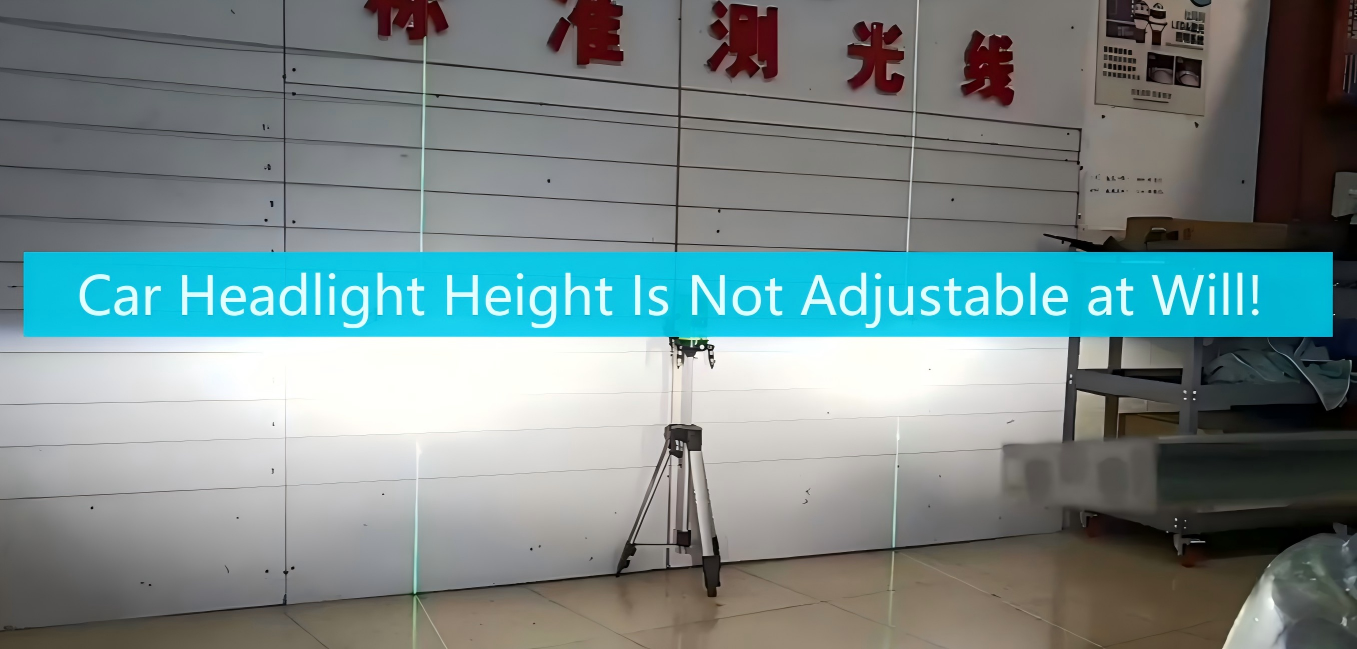
Car headlight height is a crucial detail that is all too easily overlooked.
Car Headlight Height Is Not Adjustable at Will! Both Excessive and Insufficient Heights Pose Driving Safety Risks
Car headlights aren't necessarily better just because they're brighter—it's a common misconception that many car owners get wrong.
Myth Debunked: Are Brighter Car Headlights Safer? Absolutely Not
Avoid the pitfalls of aftermarket modification—and steer clear of the trap of "visual deception."
Critical dimming threshold for automotive lamps: replacement is recommended once the brightness drops by 30% from the initial level.
Focusing on the differences in maintenance of car lights with different light sources, with particular attention to the maintenance details of LED car lights.
Differences in Maintenance of Car Lights with Different Light Sources: LED Lights Don't Need Frequent Replacement, Pay Attention to These Details
