
Critical dimming threshold for automotive lamps: replacement is recommended once the brightness drops by 30% from the initial level.
Author: BILITEN
2026-04-24
In previous articles, we discussed the various "pitfalls" of automotive lamp modification—excessive color temperature, exposed LED installations, scattered beam patterns, and so on. However, there is a problem even more insidious and widespread than modification itself—one that is rarely given proactive attention: the vehicle's original headlights are quietly dimming. The human eye only belatedly perceives this decline once brightness has dropped by 30% compared to its initial state—by which time, the effective illumination distance has already shortened by nearly 20 meters. Having successfully avoided the pitfalls of modification, the next trap one must steer clear of is the pitfall of "visual deception."
I. Why 30%? — Based on Dual Grounds of Safety and Regulation
The 30% figure is not an arbitrary choice; rather, it stems from a consensus-based threshold within the field of lighting engineering:
The Human Eye's Perceptual Threshold: Studies indicate that an average driver can only distinctly perceive that the "lights have dimmed" when illuminance levels drop by approximately 30%. Prior to reaching this point, the brain employs a visual compensation mechanism to "deceive" you, making the diminished lighting still appear sufficiently bright.
Regulatory Mapping: GB 7258 stipulates that the luminous intensity of vehicle lights must not fall below 50% of their initial value (for two-lamp systems: high beams ≥ 15,000 cd; for four-lamp systems: ≥ 12,000 cd). Industry standards are more stringent, recommending a replacement threshold of 30% to provide a safety margin for light degradation.
Safety Margin: At a 30% degradation level, the effective illumination distance at night is reduced by 15–20 meters (approximately one second's worth of braking distance)—a reduction significant enough to compromise reaction times in emergency situations.

II. Lifetime Curves of Different Light Sources
Which Components Undergo "Natural Degradation"? — Lifetime Curves of Different Light Sources
| Light Source Type | Initial Brightness (lm | Time to 30% Brightness Degradation | Typical Lifespan | Degradation Characteristics |
| Halogen | 1000-1500 | Approx. 2 years / 20,000 km | 500 hours | Slow, linear degradation |
| Xenon | 2500-3500 | Approx. 4 years / 50,000 km | 2,500 hours | Stable initially, rapid decline later |
| LED | 3000-6000 | Approx. 6–8 years / 100,000 km | 30,000+ hours | Extremely slow; virtually no noticeable degradation prior to failureExtremely slow; virtually no noticeable degradation prior to failure |
Additional Point:
Yellowing lampshades and accumulated dust exacerbate light loss: aging shades can cause actual light output to drop by an additional 20–30%. In such cases, even if the light bulb itself has not yet degraded, the overall illumination level no longer meets the required standards.

III. How to Determine if Headlight Luminous Decay Has Reached the 30% Threshold?
1. Most Accurate Method:
Use a mobile phone illuminance sensor app.
Measurement Procedure: Position the front of the vehicle directly facing a wall at a distance of 3 meters, then take a reading of the illuminance in the brightest central area.
For the baseline (initial) value, refer to the vehicle's owner's manual or data from a new vehicle of the same model.
2. The Most Reliable Method
Find a vehicle of the exact same make and model year, park it side-by-side with yours, and observe whether your headlights appear noticeably dimmer or more yellow in comparison.
At night, park in a fixed location along a specific stretch of road; switch on your low beams to illuminate a wall, and compare the resulting brightness level against your recollection of its usual intensity.
3. Quick Assessment
Halogen bulbs in use for over 3 years → Almost certainly have experienced a degradation of over 30%.
Severely yellowed headlight lenses → Overall light loss likely exceeds 40%.
Feeling "more eye strain" while driving at night → Your pupils are dilating further; this is a physiological response to insufficient illumination.
Additional Note:
Some vehicles are equipped with a "lighting self-diagnostic system." When an abnormal current or voltage is detected, a fault indicator light will illuminate; at this stage, light degradation may have already reached 40–50%.

Conclusion: The 30% Threshold Is a Safety Minimum, Not a Recommended Value
The guideline to "wait until brightness drops by 30% before replacing" represents the acceptable limit—not the ideal maintenance interval. For halogen bulbs, proactively replace them every two years; for xenon bulbs, monitor for color shifts; and for LED lights, ensure the lens covers remain clear. By performing routine headlight maintenance, and by promptly inspecting and replacing the lighting units once brightness has diminished to this critical threshold, you can ensure a consistently optimal lighting environment.
Myth Debunked: Are Brighter Car Headlights Safer? Absolutely Not
Avoiding Pitfalls in Car Light Modification: Scope of Compliant Modification and Safety Hazards - Important to Learn
Related Article
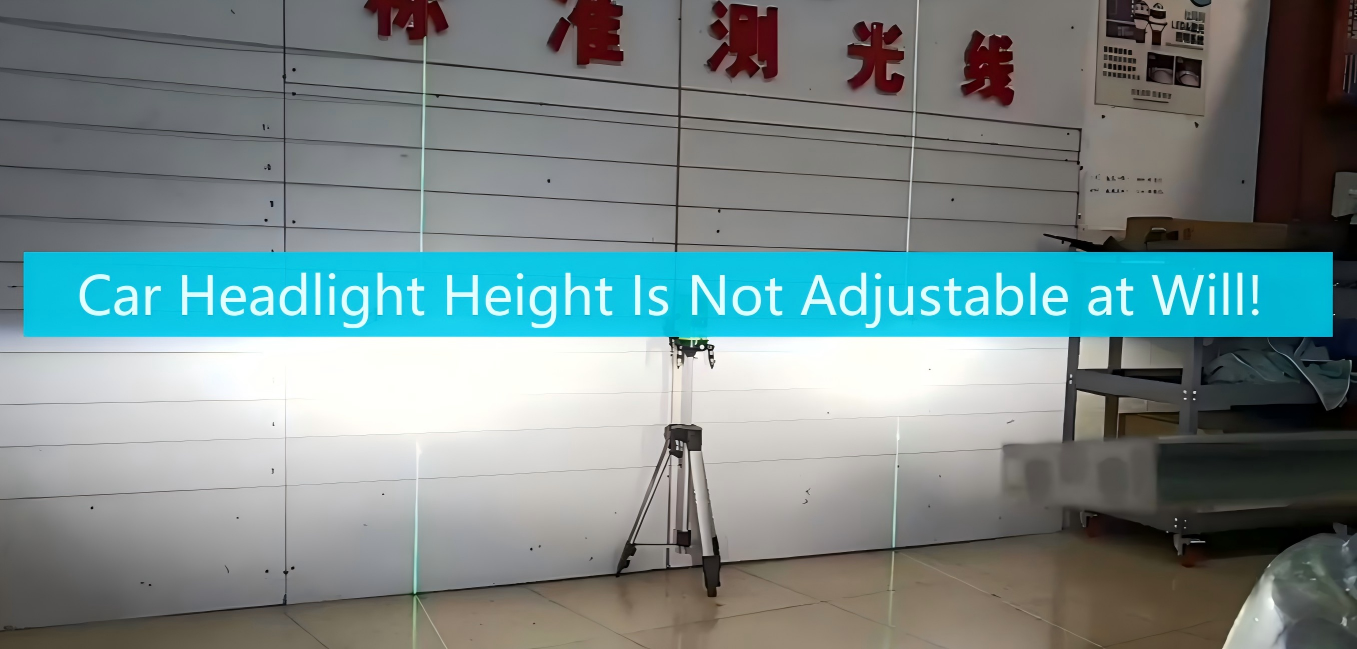
Car headlight height is a crucial detail that is all too easily overlooked.
Car Headlight Height Is Not Adjustable at Will! Both Excessive and Insufficient Heights Pose Driving Safety Risks
Car headlights aren't necessarily better just because they're brighter—it's a common misconception that many car owners get wrong.
Myth Debunked: Are Brighter Car Headlights Safer? Absolutely Not
Legal and Compliant Car Light Modification - Very Important
Avoiding Pitfalls in Car Light Modification: Scope of Compliant Modification and Safety Hazards - Important to Learn
Focusing on the differences in maintenance of car lights with different light sources, with particular attention to the maintenance details of LED car lights.
Differences in Maintenance of Car Lights with Different Light Sources: LED Lights Don't Need Frequent Replacement, Pay Attention to These Details
