Car Light Usage Guide for Underground Garages, Tunnels, Country Roads
Author: BILITEN
2026-01-23
Introduction
Car lights are the "eyes" of a vehicle and a crucial guarantee of driving safety. Especially in special scenarios such as the dim and enclosed spaces of underground parking garages, the sudden changes in light and darkness in tunnels, and the rugged and dark roads of rural areas, proper use of car lights not only illuminates the road ahead but also allows other road users to clearly perceive the vehicle's position, preventing potential safety hazards at the source. However, many drivers make mistakes in using car lights in these scenarios, such as using high beams throughout tunnels or forgetting to turn on headlights on rural roads, which actually exacerbates driving risks. Therefore, this article focuses on three typical scenarios—underground parking garages, tunnels, and rural roads—and outlines the core points and practical methods for using car lights, building a strong "light" defense for safe travel.
I. Basic Vehicle Lighting Knowledge
- Low Beam: Basic illumination, non-glaring, suitable for everyday nighttime and dimly lit environments.
- High Beam: Strong beam, used in dark environments with no oncoming traffic or other lights. Abuse is extremely dangerous.
- Parking Lights (Side Lights): Mark the vehicle's outline, alerting other vehicles in low light conditions.
- Daytime Running Lights: Indicate vehicle position during the day, not for general illumination.
- Front and Rear Fog Lights: Strong penetrating power, used in low-visibility weather such as rain, fog, snow, and dust storms.
- Turn Signals and Hazard Flashers: Indicate driving intention and provide hazard warnings.
- Automatic Headlights: Detect ambient brightness using a light sensor and automatically control the lights, improving convenience. However, delays or misjudgments may occur in complex lighting conditions such as tunnels, backlight, rain, and snow. (Cannot be relied upon entirely.)
II. Underground Parking Garage
Environmental Characteristics:
- Low Light: Insufficient natural light, relying mainly on artificial lighting; some areas may have blind spots.
- Enclosed Space and Complex Structure: Numerous passageways and corners, limited visibility, easily creating blind spots.
Correct Procedure:
Before Entering
- Turn on your low beam headlights in advance to allow your eyes to adjust to the dim light and to make yourself visible to vehicles and pedestrians in the parking garage.
- If the garage is extremely dark, you can briefly turn on your high beam headlights to observe the structure, then turn them off immediately after entering.
While Driving
- Use low beam headlights at all times. High beam headlights are strictly prohibited (as they will directly illuminate the driver's side of oncoming or preceding vehicles, causing momentary blindness).
- Use your turn signals effectively: Turn them on in advance at every intersection and before turning to alert vehicles coming from other directions.
- When going up or down steep slopes, drive slowly and pay attention to changes in headlight angle to avoid sudden appearances of vehicles or pedestrians in your blind spots.
- Maintain a low speed and be prepared to avoid vehicles reversing from parking spaces or pedestrians crossing the road.
- Be aware of fixed blind spots such as pillars, corners, and rearview mirrors; honk your horn if necessary.
- Maintain a safe following distance to avoid being completely blocked by the vehicle in front.
Parking and Retrieving Your Vehicle
- After coming to a complete stop, turn off your headlights, but you can turn on your parking lights (if stopping briefly).
- Before starting your car, begin driving and turn on your low beam headlights. Observe your surroundings and drive out slowly.
- When reversing into a parking space or parallel parking, make full use of your rearview mirrors, reversing camera, and parking sensors. If necessary, get out of the car to observe.
- Before leaving the parking space, be aware of pedestrians, electric vehicles, or other vehicles speeding past from either side.
Key points: Drive slowly, keep low beams on, and signal frequently.

III. Tunnels
Environmental Characteristics:
"Black and White Hole Effect": A moment of darkness upon entering, a moment of bright light upon exiting.
Correct Practices:
Before entering the tunnel:
- Turn on your low beam headlights in advance; do not rely on tunnel lights.
- If the light dims suddenly, immediately turn on your low beam headlights.
Driving inside the tunnel:
- Keep your low beam headlights on to ensure you can see clearly ahead, to the sides, and in blind spots.
- Do not use high beam headlights at any time to avoid affecting the visibility of oncoming vehicles and the vehicle in front.
When exiting the tunnel:
- Do not rush to turn off the lights. Hold the steering wheel firmly, slow down, and allow your eyes to adjust before turning off the lights and resuming normal speed.
Key Points: Low beams must be on; high beams are strictly prohibited.

IV. Country Roads ( Unlit Road)
Environmental Characteristics
Completely unlit, narrow and winding, with the possibility of suddenly appearing pedestrians, animals, or obstacles; few oncoming vehicles.
Correct Practices:
- Basic Lighting: Use low beam headlights for regular lighting.
- When to Use High Beam Headlights: When there are no vehicles or pedestrians ahead or in the opposite direction, turn on high beam headlights to obtain a wider and farther field of vision.
- Switching Pattern: When an oncoming vehicle is detected, switch to low beam headlights when approximately 150-200 meters away.
- When following a vehicle in front, switch to low beam headlights to avoid glare from high beam headlights shining through the rearview mirror of the vehicle in front.
- Before approaching intersections or curves, switch to low beam headlights in advance and reduce speed to prevent glare to oncoming drivers or obstruction of your own vision.
- Fog Light Assist: In case of rain or fog at night, turn on both low beam headlights and front and rear fog lights simultaneously. Do not use high beam headlights (as they will create diffuse reflection, resulting in a whiteout). Key points: Use low beams primarily, and use high beams appropriately and courteously.

In summary, using your car lights effectively illuminates both civility and safety. Underground parking garages, tunnels, and country roads are the scenarios where the use of car lights is most easily overlooked during daily driving. Underground parking garages are dimly lit with many blind spots, so turn on your low beams in advance to avoid glare from direct high beams. Tunnels have significant changes in light levels, so always turn on your lights before entering and use low beams throughout to avoid affecting the vision of others. Country roads have no streetlights and complex road conditions, so use low beams primarily. Use high beams politely when appropriate, but switch back to low beams promptly when approaching curves, meeting oncoming traffic, or pedestrians. Using your car lights correctly not only improves visibility but also ensures that others can see you promptly, which is crucial for safety.
Complete Guide to Car Light Routine Maintenance and Troubleshooting
Essential Driving Lesson: Misconceptions and Safety Hazards of Incorrect Auto Lights Usage
Related Article
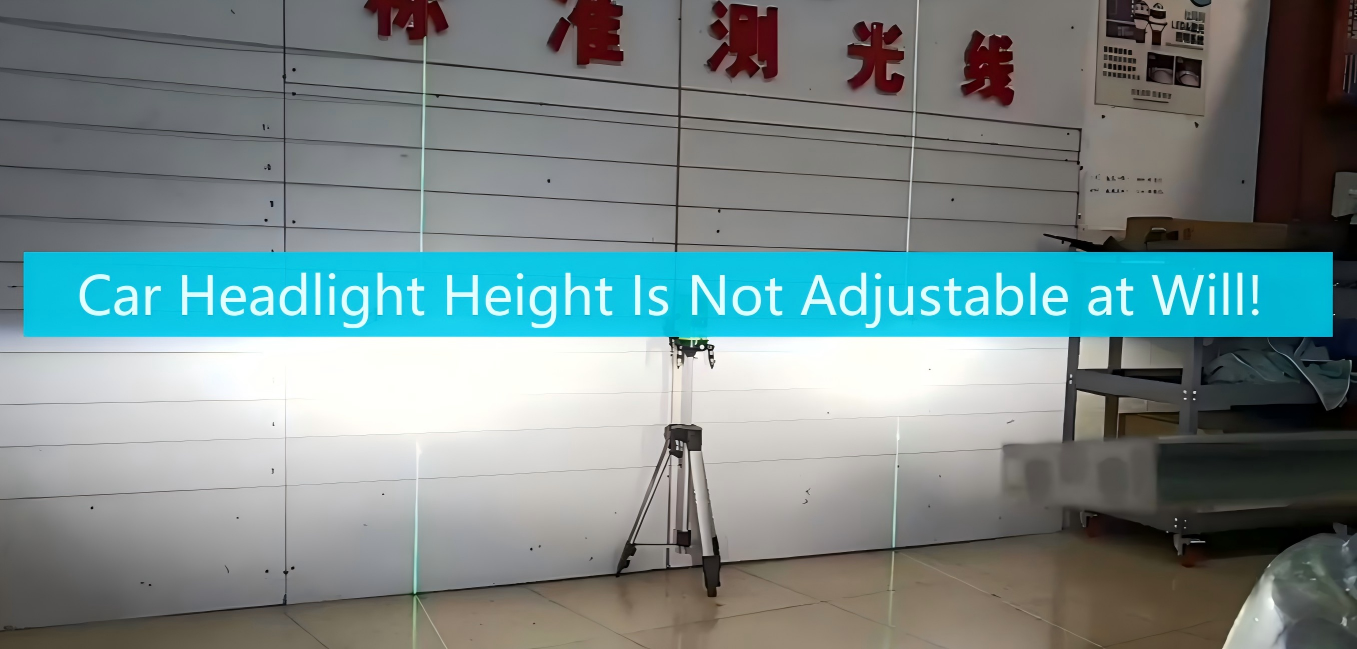
Car headlight height is a crucial detail that is all too easily overlooked.
Car Headlight Height Is Not Adjustable at Will! Both Excessive and Insufficient Heights Pose Driving Safety Risks
Car headlights aren't necessarily better just because they're brighter—it's a common misconception that many car owners get wrong.
Myth Debunked: Are Brighter Car Headlights Safer? Absolutely Not