Radiator of a Headlight's Heat Dissipation Structure
Author: Biliten
2025-08-29
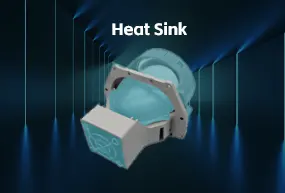
The radiator plays the most critical role in the structure of the headlight. The top connects the lens and the lens bracket, the middle carries the light board driver, and the bottom is connected to the cooling fan. It is the bridge for all components to communicate with each other and should not be underestimated.
What is a Heat Sink?
A heat sink is a device used to transfer and dissipate heat generated by electronic, mechanical, or lighting equipment to the surrounding environment to prevent damage or performance degradation due to overheating.
Is the Heat Sink Important? YES!
1. Heat sinks control the temperature of LED/xenon lamps and maintain stability.
High-power LEDs or xenon bulbs generate a significant amount of heat during operation. Heat buildup can cause degradation in light source performance (such as light decay and color temperature drift) or even damage. Heat sinks quickly dissipate heat through active cooling (such as fans) or passive cooling (metal fins), ensuring stable operation at a safe temperature.
2. Extending the Life of Headlights
High temperatures are a major factor in the aging of electronic components. Effective heat dissipation can significantly extend the life of core components like LED driver circuits and bulbs, reducing failure rates and lowering repair costs.
3. Adapt to Complex Environmental Requirements
In high-temperature environments or enclosed headlight spaces, the radiator must possess efficient heat exchange capabilities (e.g., aluminum alloy materials and heat pipe technology) to ensure reliable operation under extreme conditions (such as summer sun exposure and long-distance driving).
High-power LEDs or xenon bulbs generate a significant amount of heat during operation. Heat buildup can cause degradation in light source performance (such as light decay and color temperature drift) or even damage. Heat sinks quickly dissipate heat through active cooling (such as fans) or passive cooling (metal fins), ensuring stable operation at a safe temperature.
2. Extending the Life of Headlights
High temperatures are a major factor in the aging of electronic components. Effective heat dissipation can significantly extend the life of core components like LED driver circuits and bulbs, reducing failure rates and lowering repair costs.
3. Adapt to Complex Environmental Requirements
In high-temperature environments or enclosed headlight spaces, the radiator must possess efficient heat exchange capabilities (e.g., aluminum alloy materials and heat pipe technology) to ensure reliable operation under extreme conditions (such as summer sun exposure and long-distance driving).

What Types of Radiators Are There?
1. Cooling method: passive, active, and hybrid.
- Passive cooling: Relies on natural convection and heat radiation, without a fan.
- Active cooling: Forced cooling (such as fans or water pumps).
- Hybrid cooling: Combination of passive and active cooling.
2. Classification by Material:
Metal Radiators (Aluminum, Copper): Offer fast heat conduction and low cost, widely used in electronics and automotive cooling.
Heat Pipe Radiators: Utilize a liquid evaporation/condensation cycle within a vacuum tube for efficient heat conduction (commonly used in high-end CPUs and LED headlights).
Liquid Cooling (Water/Oil Cooling): Dissipates heat through liquid circulation, resulting in extremely efficient heat dissipation (e.g., high-performance computers and electric vehicle batteries).
Heat Pipe Radiators: Utilize a liquid evaporation/condensation cycle within a vacuum tube for efficient heat conduction (commonly used in high-end CPUs and LED headlights).
Liquid Cooling (Water/Oil Cooling): Dissipates heat through liquid circulation, resulting in extremely efficient heat dissipation (e.g., high-performance computers and electric vehicle batteries).

So, Which Material is Most Suitable for Car Light Radiator?
The material selection for headlight radiators must take into account thermal conductivity, lightweight, cost, and processing performance.
| Material | Temperature Resistance | Heat Dissipation Efficiency | Weight (density g/cm³) | Cost | Processing Difficulty |
| Aluminum Alloy | 150-200 | 150-200 | Low | Low to medium | Easy |
| Copper | 200-300 | 380-400 | Very High | High (3-5 times that of aluminum) | Difficult |
| Magnesium Alloys | 120-150 | 50-100 | Medium to High | Medium to High | Difficult |
| Thermally Conductive Plastics | 80-150 | 1-10 | Low to Medium | Low | Easy |
| Composite Materials | 200-250 | 150-250 | Very high | High | Difficult |
Data comparisons and actual testing indicate that aluminum alloy is the preferred material for automotive lamp heat sinks. This material offers an optimal balance between heat dissipation performance, lightweighting, and processing. It can be efficiently molded into complex fin structures through die-casting or extrusion to increase heat dissipation area, while also meeting the economic requirements of large-scale mass production in the automotive industry. Consequently, various aluminum alloys are widely used in the heat sink bodies of lamps, from standard halogen lamps to mainstream LED lamps.

Summary
Radiators are the thermal stewards of various electronic, mechanical, and lighting devices. Through heat conduction and dissipation technologies, they ensure efficient operation at a safe temperature. Different scenarios require different cooling solutions, such as passive cooling (quiet), active cooling (high efficiency), or hybrid cooling (balancing performance and noise).
For professional car lamp manufacturers, heat dissipation design is no longer an auxiliary link to be remedied afterwards, but a core technical barrier throughout the early stages of product development.Biliten employs a comprehensive approach: using a highly thermally conductive aluminum alloy; meticulously calculating the structure to optimize aerodynamics for passive cooling, coupled with a silent and efficient active cooling fan; and employing advanced interface materials such as thermal grease and welding to reduce thermal resistance. The underlying logic behind these investments reflects Biliten's long-term commitment to brand reputation and user safety.
Cooling Fan for Automotive Lighting
What's so special about the tiny chip inside LED car lights?
Related Article
This article explains the rationale behind the creation of tri-color fog lights.
One Product for All Road Conditions—The Rationale Behind the Tri-color Fog Light Design
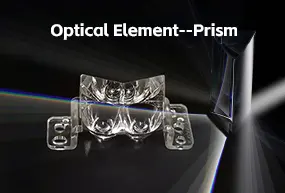
This article introduces the optical component for automotive lighting: prisms.
Optical Components - Prisms