What's so special about the tiny chip inside LED car lights?
Author: Biliten
2025-08-23
Introduction: Previous articles have introduced common light sources and their core characteristics in automotive lighting. This article will provide a detailed introduction to the LED chips, the heart of auto car LED lights, to help you gain a deeper understanding of auto car LED lights.
The application of LED chips in the automotive lighting field is profoundly changing vehicle lighting and display technologies. Its core advantages lie in energy saving and high efficiency, ultra-long life and design flexibility, bringing revolutionary upgrades to modern cars.
Technical Principles of Automotive LED Chips
1. Basic Structure: Automotive LED chips primarily consist of five components: substrate, epitaxial layer, electrodes, phosphor layer, and packaging structure. These components work together to achieve efficient and stable luminous performance.
2. Single-Chip vs. Multi-Chip Integrated Design
Single-Chip Design: A single LED chip is packaged independently. Target luminous flux is achieved by adjusting chip size, current, or phosphor.
Multi-Chip Integrated Design: Multiple LED chips are integrated into a single package or in a modular array.
2. Single-Chip vs. Multi-Chip Integrated Design
Single-Chip Design: A single LED chip is packaged independently. Target luminous flux is achieved by adjusting chip size, current, or phosphor.
Multi-Chip Integrated Design: Multiple LED chips are integrated into a single package or in a modular array.
Advantages of Automotive LED Chips
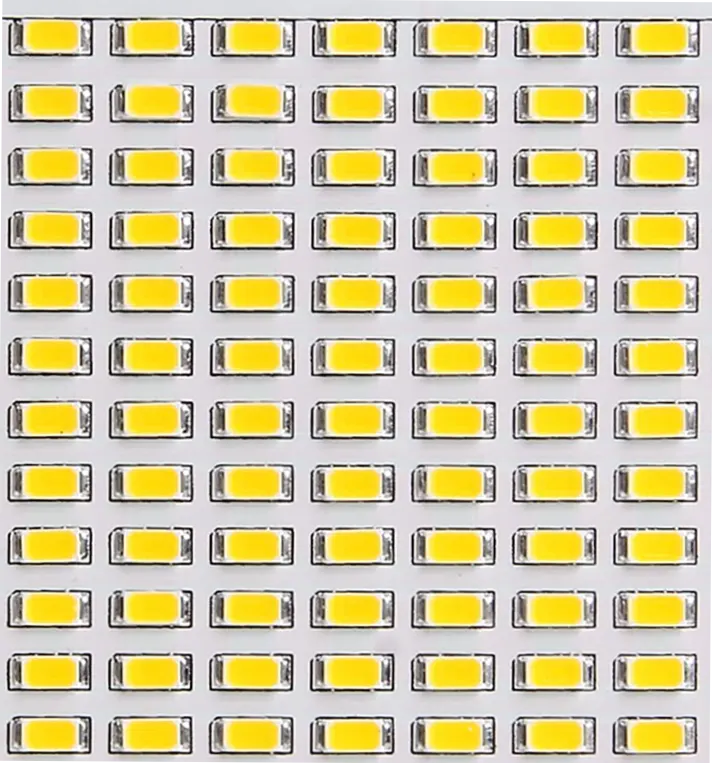
1. High Energy Efficiency: High photoelectric conversion efficiency, consuming only one-fifth the energy of halogen lamps, significantly reduces vehicle electrical load, improving the range of fuel vehicles or battery efficiency of electric vehicles.
2. High Brightness and Fast Response: High brightness (a single chip can reach over 1,000 lumens) and millisecond-level response speeds enhance the safety of brake and turn signals.
3.Design Flexibility: Compact and modular, it facilitates personalized designs such as daytime running lights, matrix headlights, and dynamic turn signals.
2. High Brightness and Fast Response: High brightness (a single chip can reach over 1,000 lumens) and millisecond-level response speeds enhance the safety of brake and turn signals.
3.Design Flexibility: Compact and modular, it facilitates personalized designs such as daytime running lights, matrix headlights, and dynamic turn signals.
Challenges of Automotive LED Chips
1. Heat Dissipation
High-power LED junction temperatures increase, leading to luminous decay (e.g., lifespan is halved for every 10°C increase in junction temperature). This requires complex heat dissipation designs (e.g., ceramic substrates and heat pipes), increasing costs.
2. Technical Bottlenecks
Luminous Efficacy Limit: Currently, commercial LED luminous efficacy is approximately 200 lm/W, close to the theoretical limit (approximately 300 lm/W), leaving limited room for further improvement.
Color Temperature Consistency: Color variations are common when combining multiple chips, affecting the lighting quality of luxury vehicles.
3. Stringent Automotive Certification Requirements: These products must pass AEC-Q101 reliability certification and ISO 26262 functional safety standards, and withstand extreme temperatures of -40°C to 125°C, vibration, and salt spray tests, resulting in a long R&D cycle.
High-power LED junction temperatures increase, leading to luminous decay (e.g., lifespan is halved for every 10°C increase in junction temperature). This requires complex heat dissipation designs (e.g., ceramic substrates and heat pipes), increasing costs.
2. Technical Bottlenecks
Luminous Efficacy Limit: Currently, commercial LED luminous efficacy is approximately 200 lm/W, close to the theoretical limit (approximately 300 lm/W), leaving limited room for further improvement.
Color Temperature Consistency: Color variations are common when combining multiple chips, affecting the lighting quality of luxury vehicles.
3. Stringent Automotive Certification Requirements: These products must pass AEC-Q101 reliability certification and ISO 26262 functional safety standards, and withstand extreme temperatures of -40°C to 125°C, vibration, and salt spray tests, resulting in a long R&D cycle.

The Impact of Automotive LED Chips on Lighting Performance
To fundamentally improve headlight brightness, headlight manufacturers often upgrade or change the number and size of LED chips on the headlight board.
1. Number of Chips
The number of chips is directly proportional to headlight brightness and illumination distance. More chips increase the total luminous flux, and the high-beam illumination distance can be increased by 30%-50%.
Research has found that the number of chips affects the uniformity of headlight light patterns. Light and dark banding is more likely to occur with fewer than 6 chips, especially with a harsh edge at the low-beam cutoff. A dense arrangement of 9-12 chips eliminates dark areas and achieves a uniform light pattern that meets EU standards. More than 30 chips are typically used in high-end matrix headlights, enabling pixel-level control and infinitely variable light-to-dark transitions.
Research has found that the number of chips affects the uniformity of headlight light patterns. Light and dark banding is more likely to occur with fewer than 6 chips, especially with a harsh edge at the low-beam cutoff. A dense arrangement of 9-12 chips eliminates dark areas and achieves a uniform light pattern that meets EU standards. More than 30 chips are typically used in high-end matrix headlights, enabling pixel-level control and infinitely variable light-to-dark transitions.
2. Chip Size
In theory, chip size and headlight brightness are also directly proportional. A larger chip size accommodates more light-emitting units (such as the PN junction of the LED chip). At the same current density, the total luminous flux is higher, and the headlight's base brightness is more adequate. Light Spot Concentration: Small-sized chips offer a more concentrated light spot. When used with an optical lens, they more easily achieve a highly focused light spot, ideal for high-beam headlight range requirements. Large-sized chips offer a larger light-emitting area, resulting in a more natural light divergence angle. After passing through the light distribution lens, the light spot is more uniform, creating a softer "paving effect" for low-beam headlights.
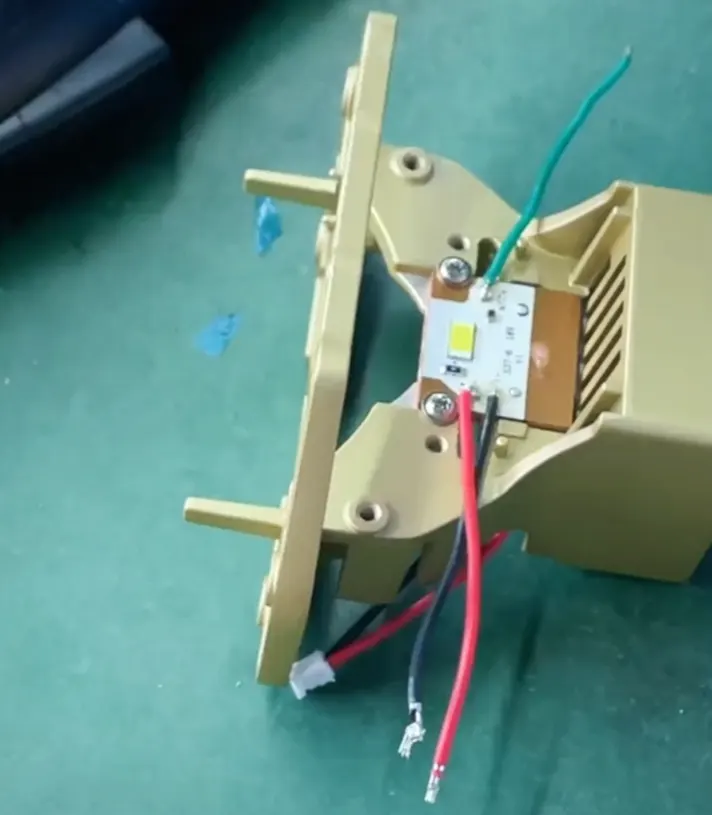
In addition, the number and size of LED chips directly impact the heat dissipation and lifespan of headlights. Single-chip, small-sized LED chips have a high heat density. Poor heat dissipation design can easily lead to excessively high chip junction temperatures, accelerating light degradation and even shortening the lifespan.
Summary
Don't underestimate these inconspicuous chips. They are the heart of auto car LED lights, supporting the entire lighting system. The number and size of automotive chips is a systematic project that requires comprehensive considerations across multiple dimensions, requiring a balanced design that considers lighting performance, functional requirements, cost control, and reliability.
As an automotive lighting manufacturer and designer with ten years of experience in automotive lighting design, Biliten consistently adheres to the core principle of "performance objectives - functional requirements - environmental constraints - cost control." Adhering to a pragmatic approach, Biliten develops customized solutions that are deeply integrated with the vehicle design, delivering the ultimate in automotive lighting solutions.
Radiator of a Headlight's Heat Dissipation Structure
What are the characteristics of different light source technologies for automotive illumination?
Related Article
This article explains the rationale behind the creation of tri-color fog lights.
One Product for All Road Conditions—The Rationale Behind the Tri-color Fog Light Design
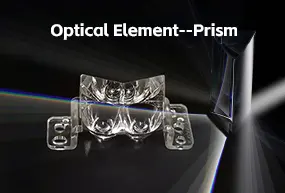
This article introduces the optical component for automotive lighting: prisms.
Optical Components - Prisms