Essential Driving Lesson: Misconceptions and Safety Hazards of Incorrect Auto Lights Usage
Author: BILITEN
2026-01-09
Introduction
Having learned about the symbols on the car's instrument panel, let's now understand the dangers and safety hazards of misusing car lights, which will help improve driving safety awareness.
I. Misuse of High Beams: The Most Dangerous Practice
Common misconceptions/problems:
- Failing to switch back to low beams when meeting oncoming traffic.
- Using high beams or frequently switching between high and low beams when following another vehicle, causing the light to shine directly into the rearview mirror of the car in front.
- Using high beams for extended periods on well-lit city roads.
Safety Hazards:
- Blinding Effect: Strong light can cause temporary blindness in oncoming drivers, preventing them from judging road conditions, pedestrians, and obstacles, greatly increasing the risk of head-on collisions.
- Vision Interference: Direct light shining into the rearview mirror of the vehicle ahead and reflecting into the driver's field of vision creates intense glare, preventing the driver from observing the rear and sides, increasing psychological stress and the likelihood of errors.
- Danger to Pedestrians: Oncoming pedestrians' vision is impaired, making it difficult for them to see approaching vehicles; when crossing the road, they are highly likely to misjudge distance and speed, leading to dangerous situations.
- Harmful to Others and Oneself: With high beams on, distant areas are illuminated, but the driver's perception of nearby or dark areas to the side is weakened. This can lead to pedestrians or other vehicles suddenly appearing and the driver being unable to react in time, causing accidents.
Correct practice:
- Obey traffic rules and never use high beams when driving on well-lit city roads; switch to low beams when encountering pedestrians.
- When passing through intersections, pedestrian crossings, and other complex road sections, use alternating lights to signal, but primarily use low beams.

II. Continuously Illuminated Fog Lights: Unnecessary Light Pollution
Common Misconceptions:
- Using fog lights as everyday lighting or "enhanced" low beams, keeping them on constantly during clear weather and at night.
- Using rear fog lights in non-severe weather conditions.
Safety Hazards:
- Distraction: Turning on front fog lights in non-rainy, foggy, or snowy weather provides little improvement in illumination and can easily distract the driver, posing a potential danger.
- Glare Hazard: Rear fog lights are extremely bright, have strong penetration, and are dazzling. In normal weather conditions, they severely interfere with the vision of drivers behind, causing prolonged glare and visual fatigue, increasing the risk of rear-end collisions.
Correct Practice:
- Fog lights are designed for use in conditions of poor visibility.
- When to use: Only use in low-visibility weather conditions such as rain, snow, fog, or dust storms.
- Usage sequence: When visibility decreases, first turn on the parking lights and low beams. If the effect is insufficient, then turn on the front fog lights; only turn on the rear fog lights when visibility is very low (e.g., <100 meters).
- When visibility improves, they must be turned off immediately, especially the rear fog lights.

III. Improper Use of Turn Signals: Miscommunication through "Light Signals"
Common Mistakes:
- Changing lanes or turning without using turn signals, or only using them at the last moment before reaching the intersection.
- Using turn signals for too short a time, flashing only two or three times before turning.
- Failing to automatically or manually turn off the turn signal after completing the turn.
Safety Hazards:
- Ineffective "signal communication" increases the probability of accidents: Changing lanes or turning without using turn signals, using them only at the last moment, or using them for too short a time, all reduce the reaction time of drivers in nearby vehicles. Other drivers may not be able to anticipate your intentions in time to slow down or avoid a collision, easily leading to scrapes, rear-end collisions, and other dangers.
- Causing misunderstandings: Improper use of turn signals can be perceived as uncivilized driving behavior, leading to conflicts.
Correct Practice:
- Before changing lanes or turning, activate the turn signal at least 3 seconds in advance; leave it on for sufficient time for others to react.
- Observe before acting: Using the turn signal is "declaring your intention," but observe and confirm safety before proceeding.
- After completing a turn or lane change, check that the turn signal has been turned off.

IV. Other Misconceptions: Poor Lighting Habits
Common Misconceptions:
- Lights not being turned on when they should be: The weather during dawn or dusk is complex, and drivers' visibility fluctuates between clear and blurry. Therefore, many drivers mistakenly believe they can see the road clearly, neglecting the importance of being visible to other vehicles.
- Not turning on headlights promptly when entering underground parking garages or tunnels at night.
Safety Hazards:
Reduced visibility: In low-light conditions or complex backgrounds (such as a hazy, rainy day), the vehicle's outline is difficult to discern, greatly increasing the risk of rear-end collisions or side impacts.
Correct practice:
- Follow the "turn on early, turn off late" principle. Turn on your parking lights or low beam headlights as soon as it gets slightly dark or visibility decreases.
- Low beam headlights must be turned on in tunnels and underground parking garages.
- In rainy or foggy weather: turn on low beam headlights and parking lights, and turn on fog lights if necessary. Use hazard warning lights (double flashing lights) only when your vehicle breaks down or when driving at low speed on a highway with extremely low visibility.

V. Other Common Misconceptions
- Unauthorized modification with inferior xenon/LED headlights: This results in scattered and dazzling light, endangering both yourself and others, and is also illegal.
- Failure to repair damaged brake lights/parking lights promptly: The vehicle behind you cannot judge your deceleration intentions, leading to a very high risk of rear-end collisions.
- Leaving parking lights on after parking: This drains the battery, preventing the vehicle from starting.
- Not using hazard lights when temporarily parked on the roadside at night: This fails to effectively warn oncoming vehicles.
Summary
Proper use of vehicle lights is an essential driving skill and a legal responsibility for all drivers. Vehicle lights are not only a safety tool for illuminating the road ahead, but also a crucial means of safe, courteous, and effective communication between drivers and other road users.
Car Light Usage Guide for Underground Garages, Tunnels, Country Roads
Can you fully identify the symbols on your car's dashboard?
Related Article
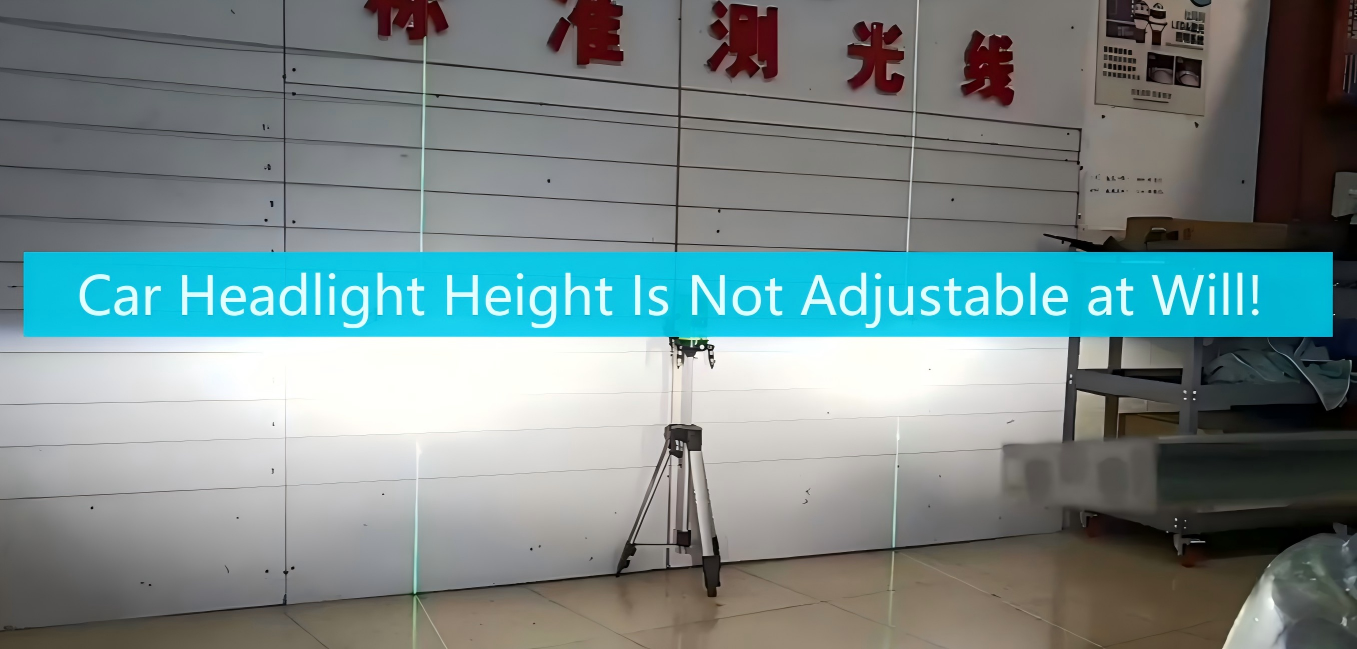
Car headlight height is a crucial detail that is all too easily overlooked.
Car Headlight Height Is Not Adjustable at Will! Both Excessive and Insufficient Heights Pose Driving Safety Risks
Car headlights aren't necessarily better just because they're brighter—it's a common misconception that many car owners get wrong.
Myth Debunked: Are Brighter Car Headlights Safer? Absolutely Not